
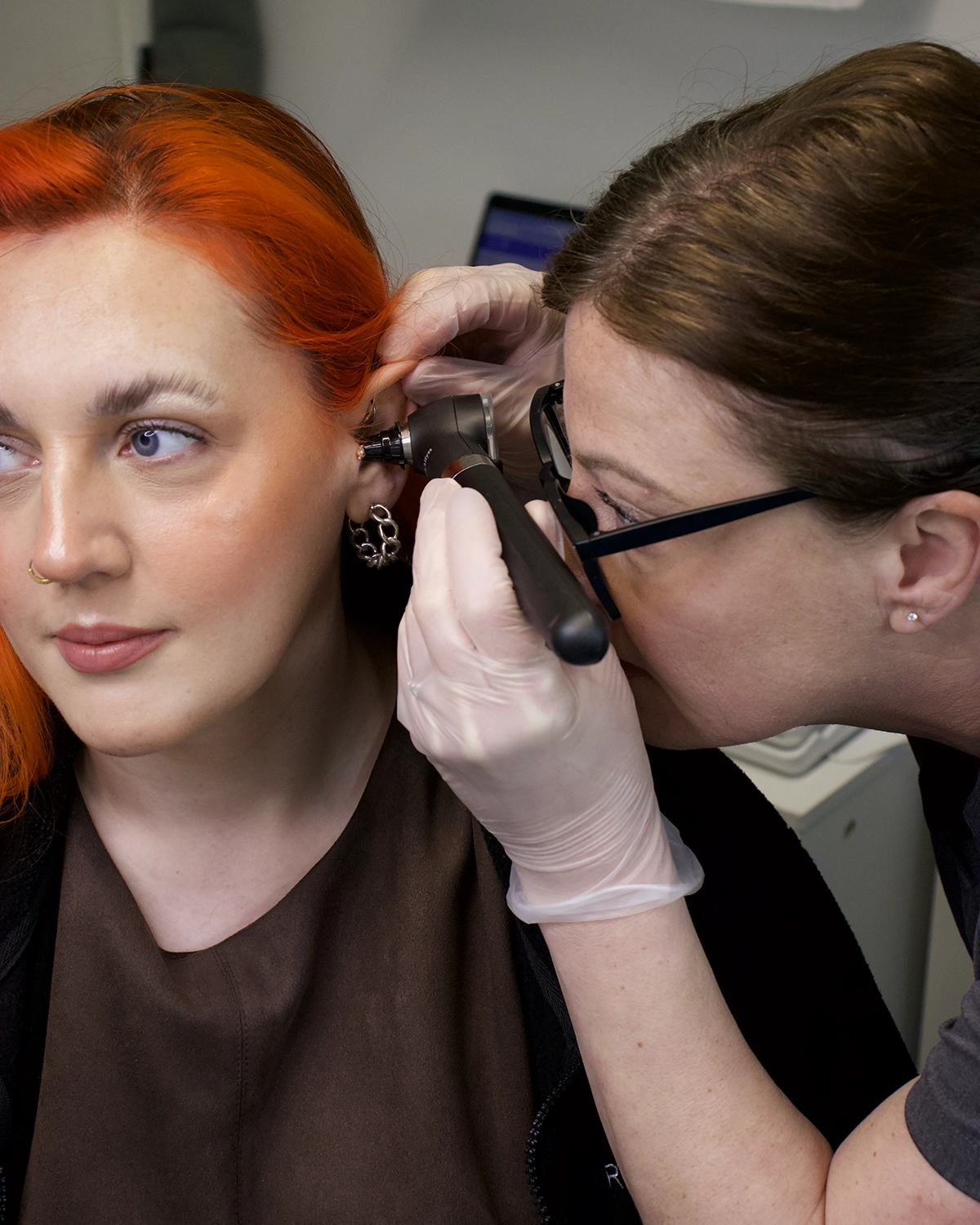
Most of us never give our ears a second thought — until the world starts to sound like it's happening through a pillow. Suddenly the telly's too quiet, conversations feel like hard work, and your own voice sounds oddly loud inside your head. Nine times out of ten, the culprit is something your body has been quietly making your whole life: ear wax.
Ear wax (cerumen) is actually a good thing. It traps dust, keeps the ear canal moisturised, and has mild antibacterial properties. The trouble starts when too much builds up, hardens, or gets pushed deeper in — often by the very cotton buds people use trying to clean their ears.
At Podiatry by Adele, we offer safe, professional ear wax removal for patients across Huddersfield and the wider Kirklees area. Below are the five signs we see most often in clinic.
Your hearing feels muffled or dulled
This is the classic sign, and usually the one that finally prompts people to book. It's not that you've gone deaf overnight — it's more like someone has turned the volume down by about twenty per cent. You find yourself asking people to repeat themselves, nudging the TV remote up a few notches, or struggling to follow conversations in busy pubs and cafés.
Muffled hearing often comes on gradually, which is why people are sometimes shocked at the difference once a blockage is cleared. If you've noticed it creeping in over weeks or months — especially in just one ear — wax is the most likely explanation.
A feeling of fullness or pressure in the ear
That stuffy, blocked-up sensation — a bit like the pressure you get on a descending flight, but it never quite pops — is another strong indicator. Patients often describe it as feeling like water is trapped in the ear, even when they haven't been swimming.
This happens when wax completely occludes the ear canal, creating a seal. Your ear still tries to equalise pressure as normal, but the wax plug prevents it, leading to that persistent underwater feeling.
Ringing, buzzing, or tinnitus-like sounds
Compacted wax resting against the eardrum can produce a range of unwanted sounds: a low hum, a high-pitched ring, a rushing noise, or even a clicking you can hear with every step. Wax isn't the only cause of tinnitus, but it is one of the most straightforward to rule out.
If the ringing started relatively recently and is accompanied by any of the other signs on this list, having the wax checked is a sensible first step before considering more involved audiology investigations.
Earache, itching, or a dull ache in the jaw
Hardened wax can press against sensitive tissue inside the ear canal, leading to a dull ache or persistent itch. Because the nerves in the ear are shared with the jaw and throat, some people feel the discomfort around their jawline rather than deep in the ear itself.
Important caveat: sharp, sudden ear pain — especially with fever, discharge, or dizziness — is more likely an infection and warrants a GP visit, not a wax removal appointment.
Your hearing aids have started whistling or cutting out
For hearing aid wearers, wax build-up is a particularly common nuisance. Even a small amount of extra wax can block the microphone or receiver, cause feedback whistling, or make the device feel like it's stopped working. Many people assume their hearing aid is faulty when the real problem is further down the canal.
Regular professional wax removal — typically every six to twelve months — keeps hearing aids performing properly and can significantly extend their useful life.
Why not DIY? There's a well-worn piece of advice in audiology: never put anything smaller than your elbow in your ear. Cotton buds compress wax further down the canal, creating a denser plug that sits closer to the delicate eardrum. Olive oil drops, applied for a few days beforehand, are genuinely useful for softening stubborn wax — but they work best as preparation for professional removal, not a stand-alone fix.
Safe ear wax removal in Huddersfield
Podiatry by Adele offers microsuction ear wax removal from our clinic in Huddersfield, serving patients from Lindley, Marsh, Oakes, Longwood, Lockwood and Netherton.
Microsuction is widely regarded as the gold standard: a gentle medical suction device is used under direct visualisation, so the clinician can see exactly what they're doing throughout. No water, no syringing, no mess.
Appointments take around thirty minutes. In most cases, one or both ears can be cleared in a single visit — patients often remark on how loud the world suddenly seems on the walk back to the car.
When to book, and when to see your GP first
Book a wax removal appointment if you're experiencing any combination of the signs above and have no history of recent ear surgery, perforated eardrum, or active ear infection. If you have ear pain with fever, discharge, sudden hearing loss, or symptoms on one side only following a head injury, please see your GP first.